Principles of Technocommunist Ideology
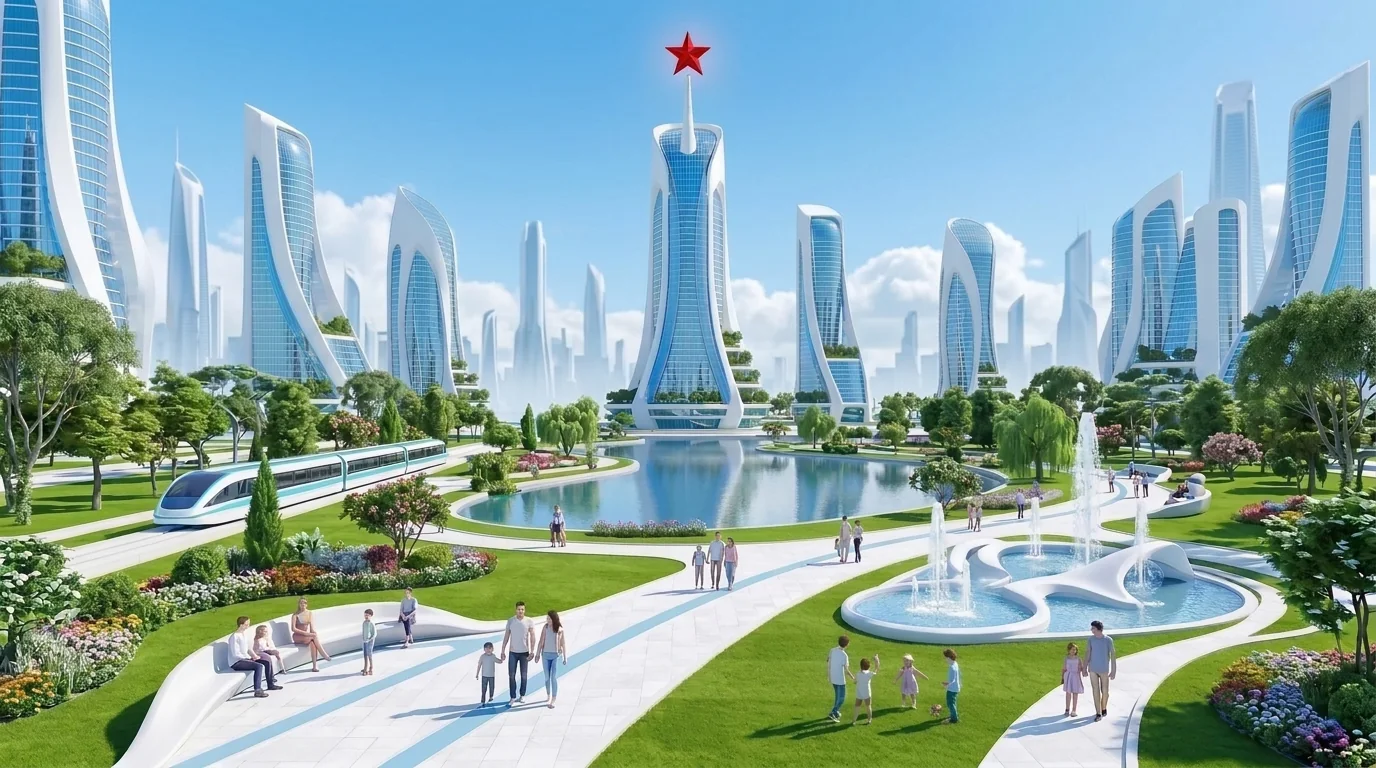
Our goal is to transform the world around us into a society that exists for the benefit of all humanity. These goals cannot be achieved without a progressive ideology, public ownership of the means of production, and the advancement of science and technology. Only by building a society of social justice—where humanity is the creator and master of its world—can human civilization flourish and pave its path to the stars. We believe humanity deserves a better future.
- Materialism as the Foundation
The world is moving, changing matter. Matter is objective reality—uncreated, eternal, and infinite.
Irrational belief in the supernatural is unacceptable to us, as is a metaphysical positivist approach within materialism.
- Scientific Approach
The world is fundamentally knowable through the scientific method; therefore mere faith is unacceptable—we need knowledge. Theory and practice go together. Without acting upon the world, it cannot be known, and knowledge itself must be applied. Accordingly, we strive to deepen scientific knowledge, enlighten people, promote the value of science and technology, and put knowledge into practice.
- Development
We hold that the material world as a whole develops, improves, and grows in complexity. There is a universal law of increasing complexity of forms, encompassing both quantitative and qualitative growth. Although degradation may occur in specific periods or communities, we have the power to reverse it.
- Eternal Struggle
We strive for expansion, broadening horizons, and acting as a catalyst for social progress. A passive, contemplative stance is unacceptable to us. Struggle may be waged against an unjust social order and exploiters, as well as against hostile, unreasoning nature. In any case, we will not stand still waiting for things to sort themselves out.
- Reliance on Labor
Development is only possible through useful work against equilibrium. Humanity evolved as a species through labor. Labor is a natural human need. Only through labor can a person shape themselves and develop the world around them.
- Automation of Processes
Delegating all work to machines and robots is unacceptable to us. They are a tool of labor, not a means of escaping it.
- Free Will
The course of history is not completely predetermined or singular. People possess freedom of action within objective conditions. Humans are the makers of their own destiny; our shared future depends on each of us.
- Anthropocentrism
Consciousness is a property of highly organized matter. Today, humans possess the most highly developed consciousness on Earth, though comparable consciousness (such as artificial intelligence) may emerge over time. Humanity stands above less organized matter. All people must be equal in rights. In the future, AI may also be recognized as equal in rights if it achieves sufficient organization. At the same time, humanity must continuously develop to maintain its high status and not yield to another species.
- The New Human
Humans are not the pinnacle of creation; evolution continues. We strive to enhance human capabilities through scientific knowledge—for example, via cybernetics or biotechnology. Such enhancements must expand human complexity rather than restrict it, not as an end in itself, but as a continuation of the law of increasing complexity and acquiring better tools to master reality.
- Collectivism
A collective is greater than the sum of its individuals—it is a unified whole moving toward a common goal. Collective interests therefore take precedence over individual ones. Overall effectiveness comes from the effectiveness of each comrade and the synergy of interactions within the collective. Within the collective, one person to another is a friend, comrade, and sibling.
- Self-Organization
True power begins with people when they organize themselves and their comrades. Decisions are not handed down from above, but forged by collectives.
- Looking to the Future, Not the Past
We build on the achievements of the past and learn from past mistakes, but simple nostalgia for the USSR is unacceptable to us. Our gaze is directed toward a bright future—that is what we intend to build.